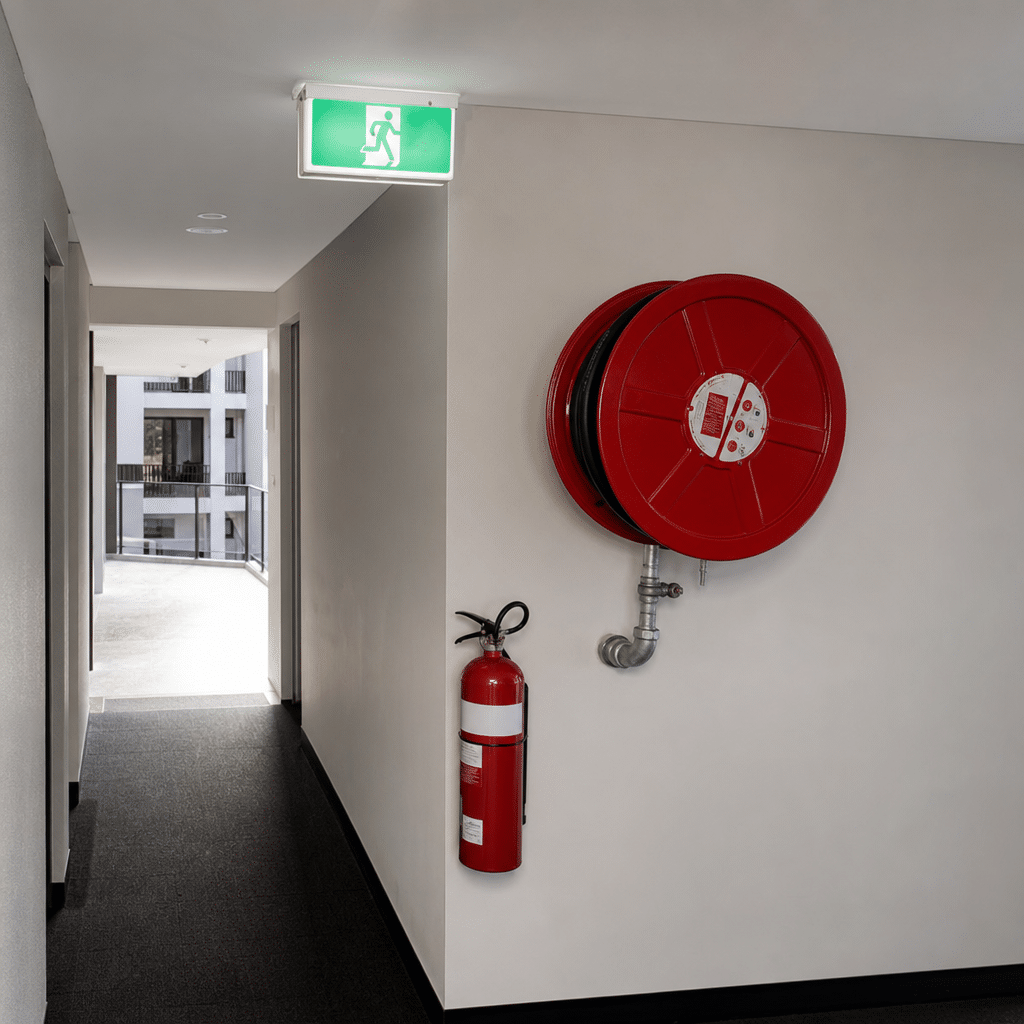
Every year a strata building has to prove its fire safety measures still work. In New South Wales that proof is the Annual Fire Safety Statement, or AFSS. It sounds like paperwork, but behind it sits a genuine safety obligation and, if it lapses, a real compliance and insurance risk. Here is what the statement covers, who can sign it, and why buildings so often miss the deadline.
What an AFSS actually is
An Annual Fire Safety Statement is a document that confirms each of the essential fire safety measures listed for your building has been inspected and assessed as working, and that the paths of exit are clear and compliant. Those measures are the things that save lives in a fire: fire doors, exit and emergency lighting, hydrants and hose reels, extinguishers, alarms and detection, sprinklers where fitted, and mechanical smoke systems. The statement is issued once a year and lodged with the local council and Fire and Rescue NSW, with a copy displayed in the building.
Queensland works differently but the principle is the same. QLD buildings maintain their fire safety installations to the Building Fire Safety Regulation and certify them on their own cycle. Wherever your building is, the committee’s job is the same: make sure the measures are maintained and the annual certification does not lapse.
Who can sign it
This is where committees often get caught. Each measure has to be assessed by a suitably qualified person, and the final statement can only be signed by an accredited practitioner (fire safety) for the more complex measures. A general electrician or handyman who services one part of the system cannot sign off the whole statement. The building owner, which for a strata scheme is the owners corporation, is legally responsible for making sure the assessment happens and the statement is lodged on time, even though a qualified professional does the actual certifying.
Diarise the statement’s due date three months early. Booking the assessment with a buffer gives you time to fix any defects the inspection finds before the deadline, instead of lodging late because a fire door failed at the last minute.
The defects that hold statements up
An assessor cannot certify a measure that does not pass, so a single failed item can delay the whole statement. The usual culprits are fire doors that no longer close and latch properly or have been wedged open, exit and emergency lighting that fails its discharge test, blocked or locked exit paths, hose reels and extinguishers overdue for service, and gaps in fire-rated walls where cabling or plumbing has been run through without proper sealing. None of these are dramatic on their own, which is exactly why they get missed until inspection day.
What a committee should do each year
Keep a single register of your building’s essential fire safety measures and when each was last serviced, book the annual assessment well ahead of the due date, and act quickly on any defects the assessor flags. Use contractors who work in strata and understand that the statement is a whole-of-building sign-off, not a series of disconnected services. Getting ahead of it turns a stressful annual scramble into a routine piece of building management, and keeps the owners corporation on the right side of both the regulator and the insurer.
Fire safety statement coming due?
Find strata-experienced fire compliance and testing specialists who can assess your building and help you lodge on time.